
Discover the Universe
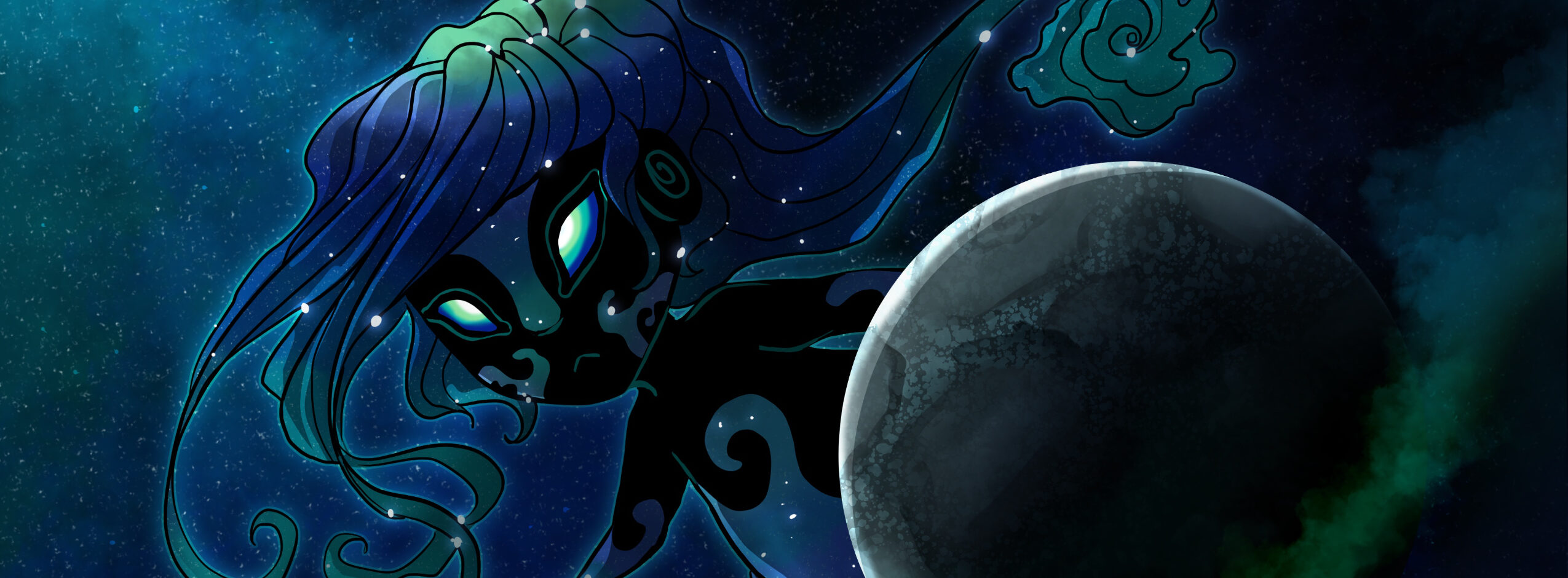
Explorers are the passive observers of the mysterious deep space species colloquially called Galaxy Children. If you’ve found your way to this page, you must be as curious about these strange interstellar creatures as we are. Here you will find public reports, general species information, and a selection of official sightings gathered from research teams traversing the depths of space.
What are Galaxy Children?
Galaxy Children is the common term for the species called galaxias ens genos, which roughly translates to “offspring of the galaxy”. These creatures are born from special constellations and have oddly child-like features, but they should never be mistaken as infantile. Galaxy Children are massive beings with powerful abilities and unpredictable personalities, forming an integral part of a unique interstellar ecosystem.
Where do they come from?
At the core of every Galaxy Child lies a Major star and a set of Minor stars. A Major star is a birth star that turns into a Galaxy Child’s form. Minor stars support the Major star and often determine what Attribute a Galaxy Child will have. Birth Constellations pulse in a unique pattern of electromagnetic waves before a Galaxy Child is formed. The pattern only lasts for an observable 12 months before becoming a Galaxy Child. If a Birth Constellation fails to form a Child after 12 months the stars burn out into their base elements.
What is an attribute?
Attributes determine the abilities and special traits of Galaxy Children. They also tend to translate into their primary mode of defense or attack in their Child and Draco Forms.
Some common examples of defensive abilities are:
- Nebula – Can throw/spit stars like liquid fire to disintegrate threats
- Comet – Can shield or defend using comet tails attached to them. Draco’s can create comets to throw at enemies.
- Sun – Can generate solar flares at will
- Black Hole – Can create or destroy black holes at will
- Asteroid/Satellite – Use the asteroids around them to defend or attack (they cannot create new ones however). Most asteroids will obey these kind of Galaxy Children


Why Do They have 2 Forms?
The reason for a Galaxy Child’s evolution to Draco is varied. Some Galaxy Children can evolve to their Draco form at will, but typically the transformation is brought on by a great need or an unexpected threat. Galaxy Dracos possess a secondary Major Star and at least one new Minor star to better maintain their form.
How Do they communicate?
When a Galaxy Child speaks they emit all notes of a specific word in order of appearance, with an elongated note at the end to denote a completed word. For example: “hello” contains five notes, with a hold on the “o” to denote the end of the word. The lengths of tones or word-endings can also convey mood, sarcasm, or other emotional factors.
How did they get names?
Galaxy Children names are based on three unique signifiers linked to their discovery order and visual appearance. The first signifier is a letter of the Greek alphabet in order of their discovery and entry into the main Galaxy Child database. The second signifier is a Galaxy Child’s primary star color in Latin. The third signifier is either a Galaxy Child’s attribute or primary identifier in Greek. A Galaxy Child’s secondary form has the suffix “Draco” attached.
Due to the lengthy full naming structure of a Galaxy Child, each Galaxy Child also has a shorthand designation. For example, the Galaxy Child Alpha Niger Komítis is more commonly known by the shorthand designation “Niko”.
What do they fear?
The natural predator of Galaxy Children are the Skiá. These strange beings eat light and have an almost bottomless appetite.. The Skiá can also evolve to a Draco form but no Galaxy Child has seen one and lived.
On average a Skiá is twice the size of a Galaxy Child. They travel in packs of a half dozen or more and possess no stars, but they generate a malevolent red light after they’ve eaten.
Official Sightings [Redacted]
Below is a selection of official sighting reports on Galaxy Children currently under surveillance by our researchers. For full reports, species information, and deep-space imagery please refer to the official Explorers Guidebook.
